Table Of Content
- Bowie Knife Embroidery Design - Hunting Embroidery Design - Big Knife - Blade - Sword - Machine Embroidery
- Forging swords throughout history
- Custom Orders
- Unearthing the Impact of Short Swords on Modern Weapons
- 【Weapon Design】Become a Weaponsmith 〜Sword Edition〜
- RELATED ARTICLESRelated articles recommended for those who read this article
The Tanto is used for Tantojutsu which is a traditional martial arts. This must be one of the reasons why the Tanto has find its way into modern tactical knives in the West especially in the 1980s. Tanto was designed as a stabbing weapon however, still can be used for slashing as well. Some versions has thick cross sections for armour piercing duty and referred to as Yoroi Toshi.
Bowie Knife Embroidery Design - Hunting Embroidery Design - Big Knife - Blade - Sword - Machine Embroidery
These modern materials allow for the creation of blades that are incredibly strong and sharp, yet lighter than traditional steel blades. Swordsmithing is a craft rooted in bladesmithing and forging techniques that span thousands of years. Swordsmiths specialize in forging blades that are over 24 inches long to craft swords from steel. Swordsmiths use a variety of steels to forge swords, such as high carbon steels and different types of pattern-welded steels, commonly called Damascus steel. It takes years to master swordsmithing and is one of the more dangerous weapons a smith can make.
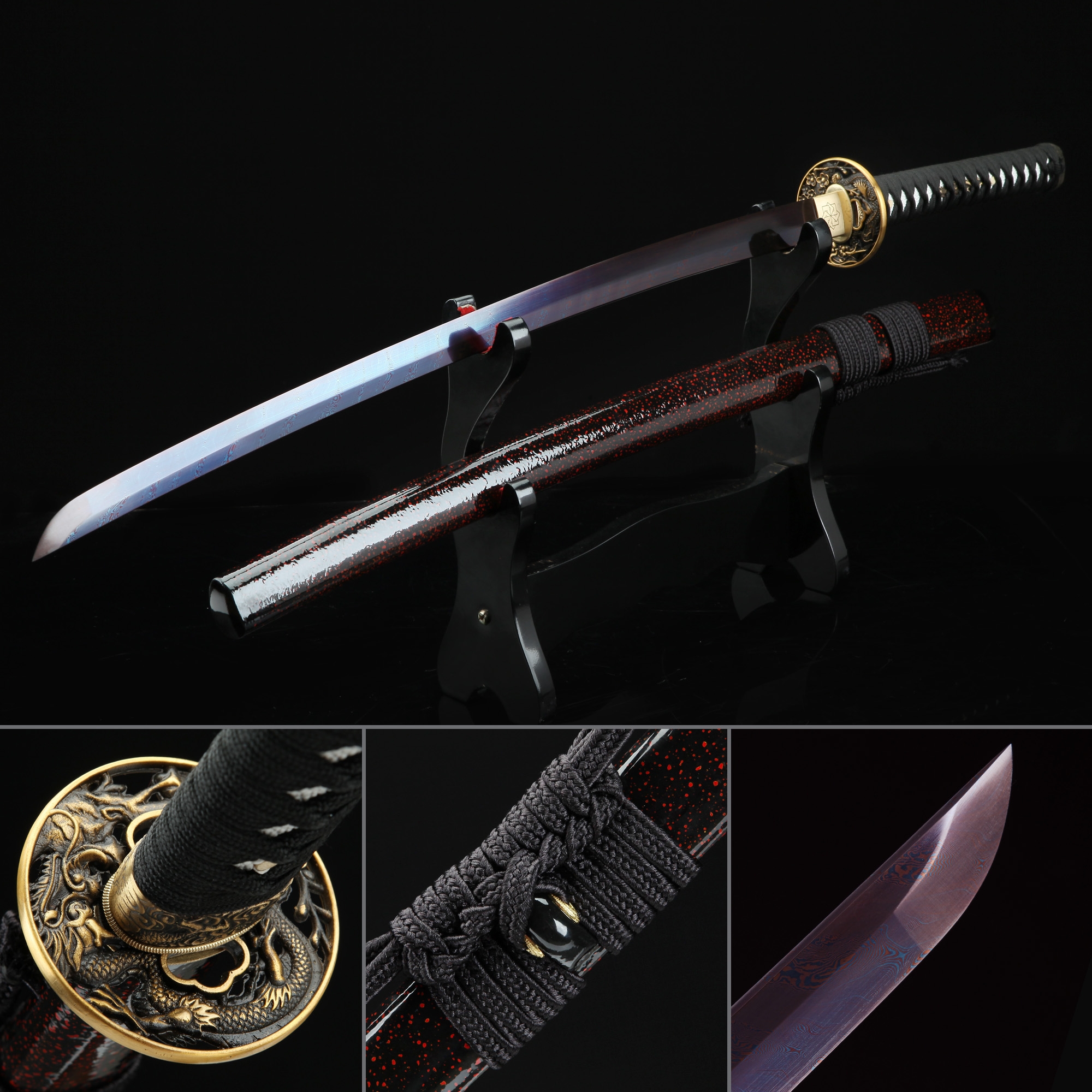
Forging swords throughout history
They sacrificed cutting power for an agile blade optimized for the thrust. The earliest swords appeared during the Bronze Age, evolving from daggers. Bronze had its limits, so these blades were still short stabbing weapons. Once iron smelting spread in the late 2nd millennium BC, swords could be forged longer and sturdier. The shape (geometry) of swords varies extensively and the creation of a typology which attempts to capture all the possible types seems to be impossible.
Demon Slayer: Every Hashira's Nichirin Sword, Ranked By Design & Function - CBR
Demon Slayer: Every Hashira's Nichirin Sword, Ranked By Design & Function.
Posted: Sun, 14 Nov 2021 08:00:00 GMT [source]
Custom Orders
Similarly, in the East, the Katana, though not a short sword, still encapsulates the spirit of the Samurai, representing their discipline, skill, and moral code. Rapiers were popular among civilians and members of the upper classes. They were often worn as a fashion accessory and used as a symbol of status and wealth. They were also used in self-defense, as the pointed tip and thrusting motion of the rapier made it more effective than cutting swords in close-quarters combat. The process of selecting and choosing your sword is one of the most rewarding experiences for sword enthusiasts.
Unearthing the Impact of Short Swords on Modern Weapons
The forging is the essential part of the production because it allows the samurai sword to be solid and relatively light. Commonly, the piece of metal is repeatedly heated by fire and hammered while the metal is being folded. The mounting of the different parts is a very delicate operation that has its origins deep in the Japanese civilization. Samurai are used to cherish their Katanas as their trusted partners, and they handle them with love and care. I purchased several custom swords and recommend to anyone who is considering it. Samurai swords store offers a lot of options that other vendors simply don’t have!
The khopesh was one of the most popular sword types used by Egyptian pharaohs and their militaries. This sword was developed from the battle axe and featured a heavily curved, single-edged blade. The sword design was that of a purely thrusting weapon, with absolutely no consideration as to cutting. Using the katana as an actual weapon was most popular around the feudal era in Japan, although the sword was not the most popular weapon on the battlefield.
New forging technologies would be vital in the expansion of the Greek Empire and in conflicts between other European groups. South and Central American civilizations did not develop metal swords, but instead crafted a wooden sword called macana. While the sword eventually became an essential weapon in many countries, many civilizations thrived without it.
Blade Shapes and Geometry
Moreover, it can also help us appreciate the role these swords have played in shaping our modern perception of the warrior and the art of combat. Japanese custom swords are not only weapons but also works of art that embody the spirit and culture of Japan. One of the most recognizable medieval weapons developed in central Asia in the 9th century. The scimitar was a curved blade with a single edge that proved deadly when used for cutting and thrusting. The light weight of the scimitar helped soldiers on horseback perform slashing maneuvers from the wrist or elbow. The Crucible’s Blacksmithing Department offers in-person Bladesmithing classes in its smithy.
These weapons were often the preferred choice for close combat scenarios where longer weapons could become unwieldy. A knightly sword, for example, would be a poor choice in the close confines of a castle siege. Instead, a medieval short sword, with its shorter reach and increased maneuverability, would be the weapon of choice. These blades aren't just shorter versions of the standard military sword - they have their own distinctive features and uses. From the katana sword and wakizashi to the tanto, Japanese swords come in many different styles and sizes.
Swords must be the type of weapon that appears in the most battle fictions than any other weapons. The Ninjato sword was said to be the legendary sword used by the Ninja. Our Ninjato for sale are made in the same length as our custom Katana swords, although you can ask for a Wakizashi Ninjato when ordering a Wakizashi. There is no exact size for this great Japanese sword however, to qualify as a Nodachi, the blade length should be minimum3 shaku or 90.91 centimeters. Nodachi was used by infantry and as ceremonial offering for Japanese patron gods.
From historical treatises on the subject, much more is known about using the Zweihänder as a dueling weapon. Swords have been evolving for thousands of years, with some of the designs being incredibly effective and deadly. Lab sessions are a great benefit, exclusively for Crucible members! Practice the skills you learn in class and explore new possibilities with your craft.
This will relax the brittleness and stress induced by the quenching process. Our customers want to achieve great results fast, and we’re always looking to provide solutions and tools that will help them do their jobs quickly and streamline operations. 3) Don't trust any of the modern stuff from recreationist groups without any supporting information. I've seen translation that make native speakers cry, things twisted to fit a particular viewpoint, etc.
One of the traditionally made Japanese short swords includes the Tanto Blade. Tanto was worn as the Shoto in place of Wakizashi in daisho on the battlefield. With slender blades of around 40 inches, rapiers epitomize the elegant swords of the Renaissance.
This shape became the most common sword style during the 11th to 14th centuries and was called an arming sword. Early Iron Age sword makers still crafted swords a bit shorter than those of the Middle Ages. The wide and sturdy blades of Late Celtic Period swords made them ideal for cutting versus thrusting. One of the most apparent examples of the sword in transition occurred during the Late Celtic Period in Europe. Bronze swords were replaced by wide and slightly longer iron blades that featured iron or bronze handles. Forging a sword is an advanced blacksmithing project and can be a huge undertaking for beginner blacksmiths.
The claymore, the shamshir, the falcata, the gladius… the list goes on. Despite being regarded as the most effective cavalry saber ever designed, it did have its detractors. The sword was effectively a one-handed lance, and those who argued against thrusting on horseback pointed out that a straight blade can be the victim of its own success.



No comments:
Post a Comment